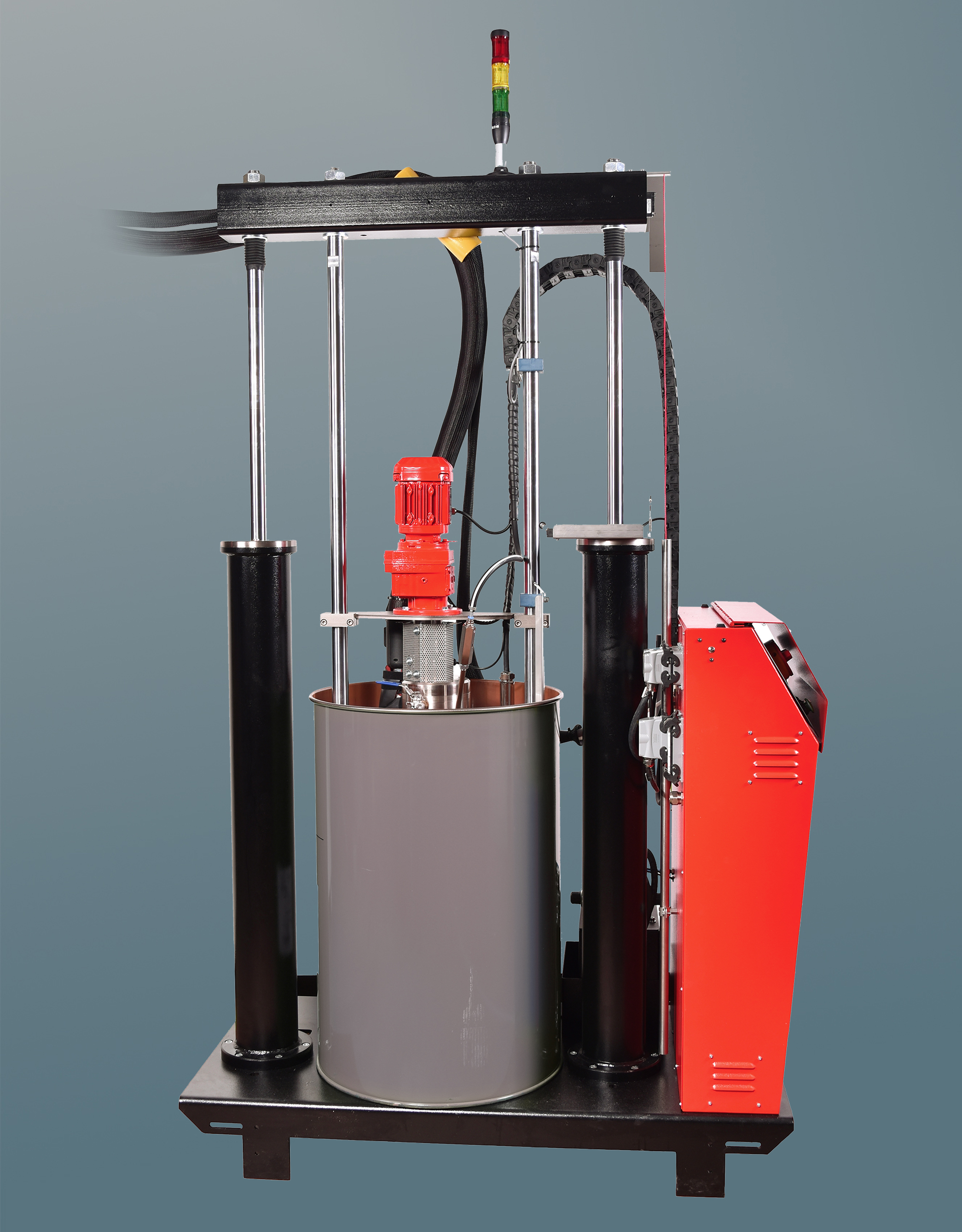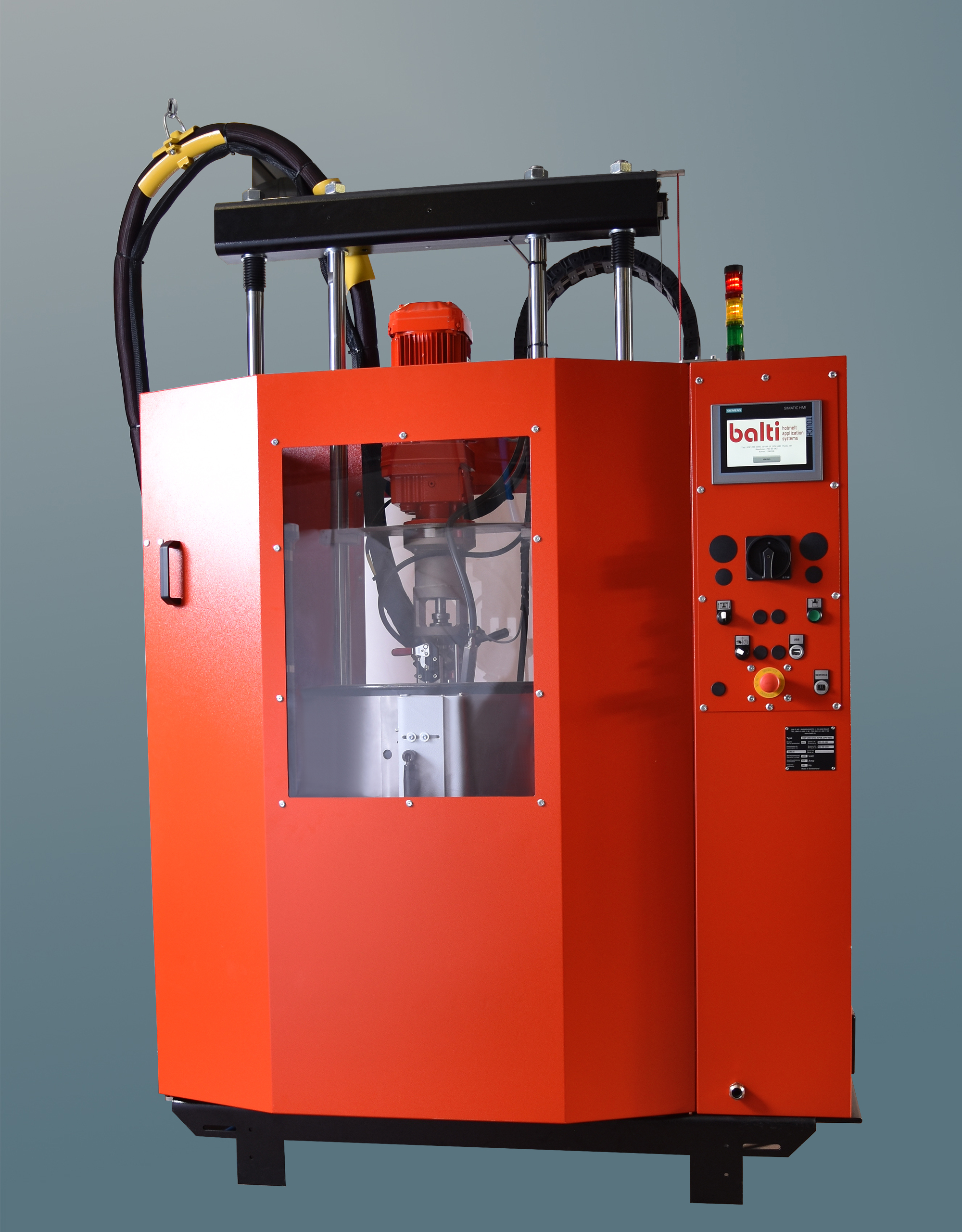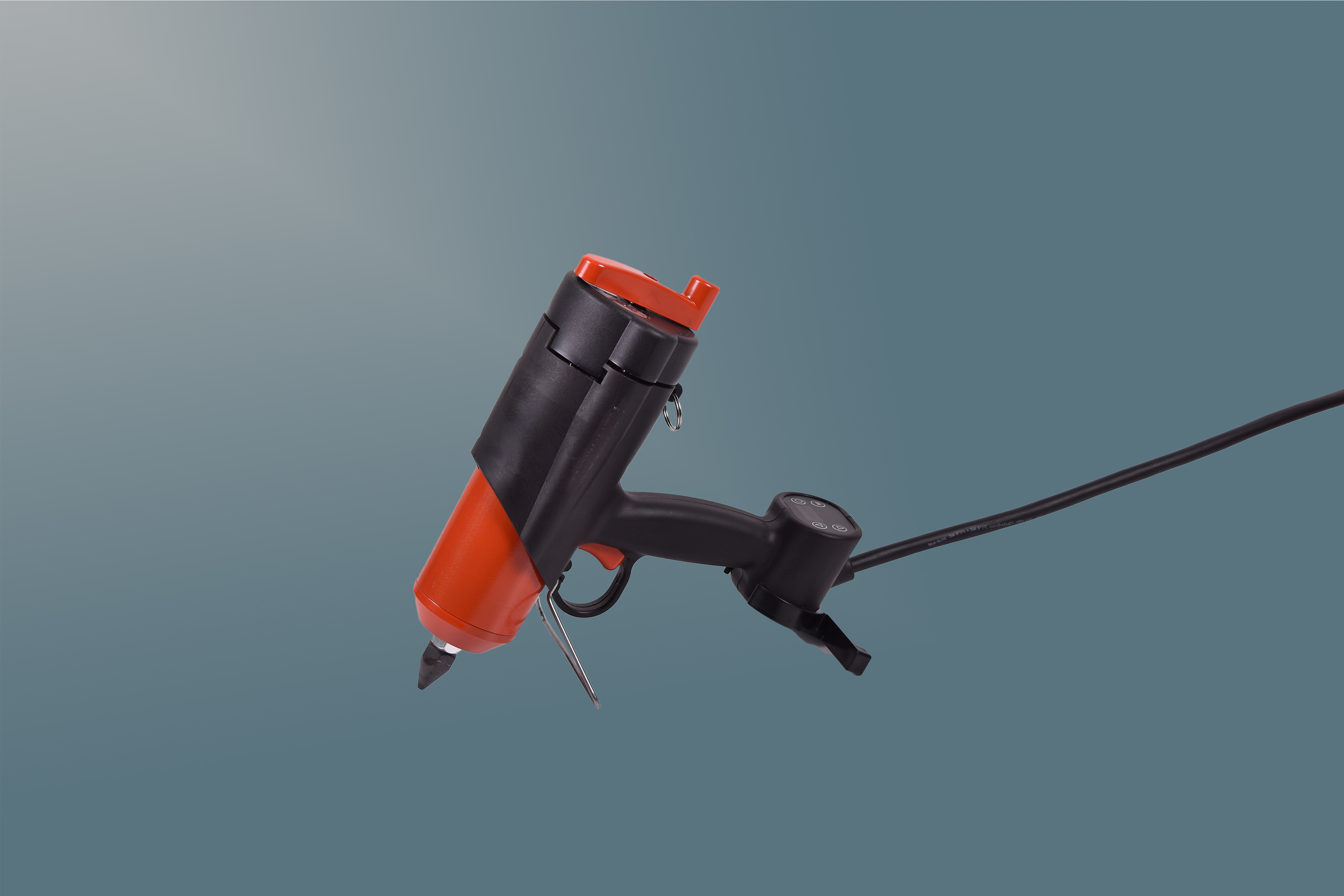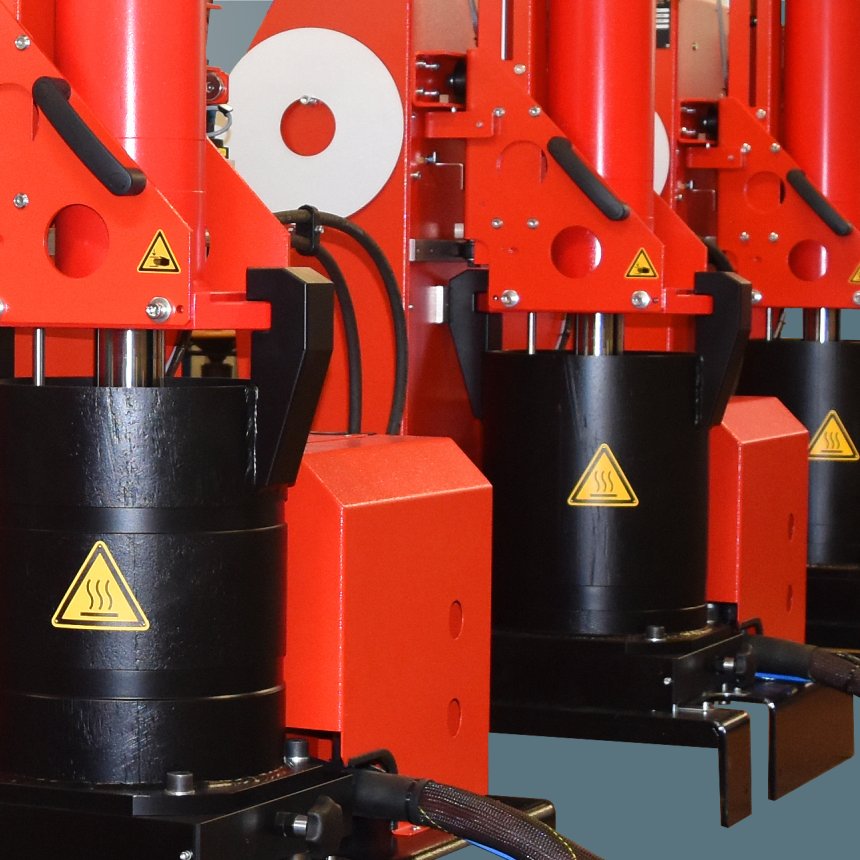
With the unique PUME concept, balti has had a system on the market for years that is absolutely gentle on the adhesive. A hydraulic cylinder presses the still cold adhesive against the melting plate, where it is melted at the lowest possible temperature and conveyed in the hose to the application unit. Whether smallest quantities or highly viscous polyurethanes, the continuously developed PUME technology can be used almost unlimitedly.

The ideal device for applications with high demand for adhesives and sealants. A melting plate, perfectly tailored to the properties of the various melting materials and the desired melting performance, is pressed onto the adhesive in the barrel. Thanks to programmable heating power and adjustable cylinder pressure, adhesive is melted as required and pressed into the concentrically arranged pump inlet integrated into the melting plate. Depending on the type of adhesive, the appropriate pump conveys the melt material through one or more heating hoses to the application units.

The balti tank melters are built to the highest quality level and come in many variants for practically every application thanks to their modular design.

For melting and conveying of meltable, non-reactive, self-flowing adhesives (thermoplastics) Hotmelt in granulate, «cushion» block or other form is filled into the top of the adhesive tank. A melting plate, which is optimally designed for melting, melts the hotmelt, which is then conveyed to the application head by a gear or piston pump through a heating hose. Size of the tank, design of the melting area, type and number of pumps, level sensors, control system and other advantages make balti systems stand out from the competition.

Dual systems are special versions of the standard balti systems for processing two adhesive containers. Such systems are used, for example, when two different adhesives are to be applied simultaneously.

The dual systems are available in several variants, depending on container sizes or adhesive type. The image below shows a system for adhesives in 2 kg bags and in granulate form.

Tandem Systems

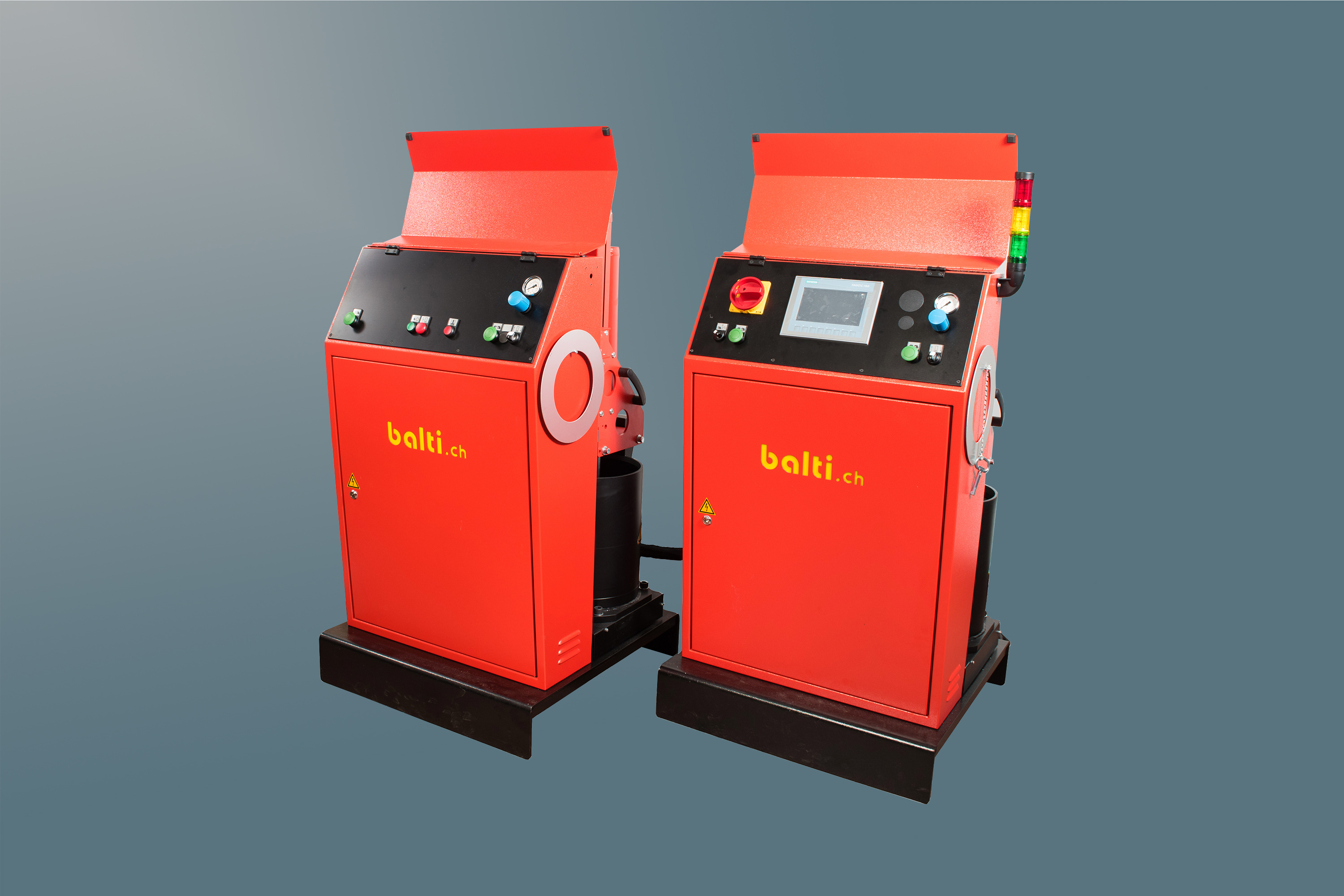
Two bag melting devices can be operated as a tandem system for uninterrupted production or as a dual system with double the output.

In the example shown below, two balti PUME-28 bag melting devices are in use. One of the two systems takes control. The major advantage of this dual system is its high efficiency and smooth production workflow.

Cartridge or adhesive without cartridge is placed in the container provided and heated. The adhesive melted at the outlet of the cartridge is pressurized pneumatically and conveyed to the adhesive valve or nozzle.

Hand-held cartridge device: the finger trigger switch controls the compressed air and the adhesive can be applied manually accordingly.

Cartridge device for stationary or automatic application: with the foot switch or external signal the valve is opened and the adhesive is applied.

balti can offer innumerable expansion options for the cartridge devices, such as: special nozzles as well as small slot nozzles, application control, adhesive management for reactive adhesives, dosing pumps, etc.

Granules are fed into a funnel-shaped hopper equipped with a sight glass. A lid protects the granules from contamination and air circulation (dust, moisture, oxygen, etc.). The free-flowing granules remain completely cold and are not subjected to thermal stress. An extruder screw conveys the granules into the heated zones and compresses them. Through the combined effect of heat and mechanical energy, the granules melt and are transported to the extruder outlet, reaching the required temperature in the process. During this operation, all air is expelled from the molten material. Although the extruder is capable of generating very high pressures, it is typically used in combination with a metering unit. In many cases, this is a piston metering unit, which also serves as a reservoir.

  • BE-10-16 with approx. 1 kg/h melting capacity
  • BE-14-20 with approx. 4 kg/h melting capacity